

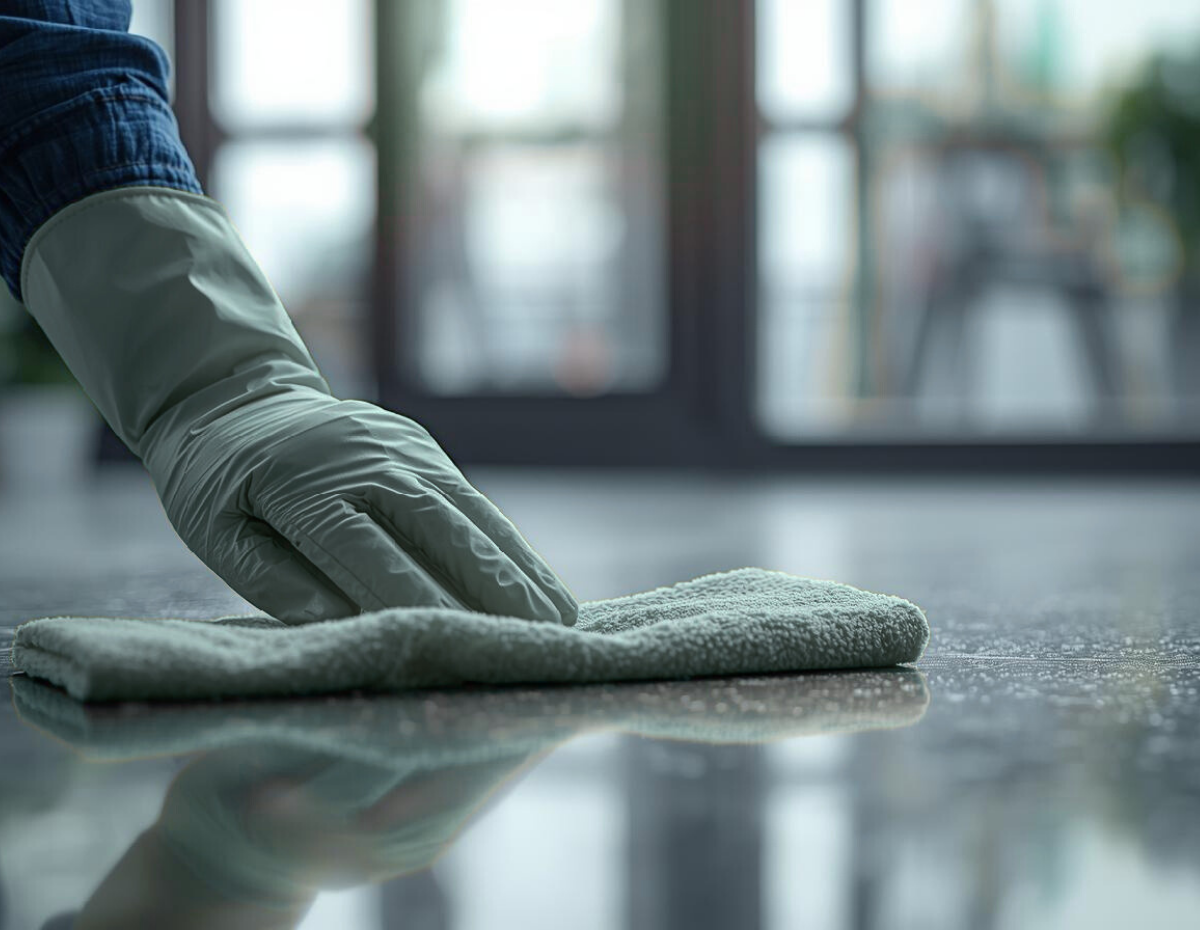
Commercial cleaning is the systematic cleaning and maintenance of non-residential buildings and shared-use facilities. It exists to preserve hygiene, safety, and operational continuity in environments occupied by employees, visitors, and the public. Unlike informal or ad hoc cleaning activities, commercial cleaning is defined by documented scope, standardized procedures, and compliance requirements. The term applies across industries and facility types and is governed by operational standards rather than individual preference.
Although widely used in business and facilities contexts, the term “commercial cleaning” is often applied inconsistently. In practice, this inconsistency leads to confusion between operational cleaning, residential services, and specialized remediation work.
Commercial cleaning is the planned and repeatable process of cleaning workplaces, public-access buildings, and shared facilities according to defined procedures, scheduled frequencies, and applicable health and safety standards. It applies exclusively to environments that are not private residences and where cleaning outcomes must support safe occupancy, regulatory compliance, and operational continuity.
Commercial cleaning is characterized by standardization rather than personalization. Tasks are defined in advance, executed using professional-grade equipment and approved cleaning agents, and evaluated against consistent performance criteria. The objective is not cosmetic improvement but the ongoing maintenance of hygienic, functional environments over time. This aligns with widely recognized public health and occupational safety guidance for non-residential environments.
Commercial cleaning includes a core set of standardized services required to maintain daily usability and hygienic integrity in non-residential spaces. These services are determined by facility function, occupancy patterns, and risk exposure. Inclusion is based on operational necessity rather than aesthetic preference.
These services are delivered on predefined schedules that reflect building use and operational risk. The defining factor is whether the task supports safe, functional, and compliant shared environments.
Defining exclusions is essential to maintaining an accurate and enforceable understanding of commercial cleaning. Without clear boundaries, the term becomes diluted and operationally unreliable.
Cleaning performed in private homes, apartments, or personal living spaces is not considered commercial cleaning. These services fall under residential cleaning, which is governed by household use rather than shared occupancy, workplace standards, or commercial compliance requirements.
Flood cleanup, mold remediation, fire damage restoration, and biohazard cleanup are excluded from commercial cleaning because they involve regulated remediation protocols, environmental controls, and licensing requirements. These services fall under specialty janitorial services and are scoped, staffed, and documented differently from routine commercial cleaning.
Cleaning involving manufacturing equipment, production systems, hazardous materials, or controlled industrial environments is not part of standard commercial cleaning. These services fall under industrial cleaning, which requires specialized training, certifications, and safety procedures specific to industrial operations.
Services performed solely for staging, decorative purposes, or personal preference do not qualify as commercial cleaning, as they do not support operational hygiene or safety.
These exclusions preserve definitional clarity and prevent commercial cleaning from being misapplied to unrelated services or environments.
These services are delivered on predefined schedules that reflect building use and operational risk. The defining factor is whether the task supports safe, functional, and compliant shared environments.
The difference between commercial cleaning and residential cleaning is functional rather than subjective. Commercial cleaning serves shared environments with multiple users, while residential cleaning serves private living spaces.
Commercial cleaning is scheduled based on operational requirements, occupancy levels, and risk exposure. Residential cleaning is typically scheduled based on homeowner preference and convenience.
In commercial environments, cleaning tasks are defined by written scopes of work, standardized procedures, and quality controls. In residential settings, tasks are often informal and customized.
Documentation is a core requirement of commercial cleaning. Task completion, inspections, safety compliance, and supply usage are recorded to support audits, continuity, and regulatory oversight. Residential cleaning rarely involves formal documentation.
These distinctions apply regardless of building size or appearance. Classification is determined by use, accountability, and regulatory context.
Commercial cleaning operates within formal standards designed to protect occupants, workers, and organizations while ensuring consistent and verifiable outcomes. These standards are informed by public health guidance and occupational safety frameworks
Together, these elements establish commercial cleaning as a regulated operational discipline rather than an informal maintenance activity.
A precise definition of commercial cleaning allows businesses to define enforceable scopes of work, evaluate performance objectively, and maintain regulatory compliance. It reduces ambiguity in contracts and operational planning.
For facility managers, definitional clarity improves coordination, risk management, and consistency across sites. For business owners, it ensures that cleaning activities support continuity rather than introduce uncertainty.
Commercial cleaning is the standardized cleaning of non-residential buildings and shared-use facilities. It follows defined procedures, schedules, and compliance requirements to maintain hygienic and functional environments for multiple occupants.
Commercial cleaning is used in offices, medical facilities, schools, retail spaces, warehouses, government buildings, and other non-residential properties where cleaning must support shared occupancy and operational continuity.
Commercial cleaning typically includes routine floor care, restroom sanitation, high-touch surface cleaning, trash and recycling removal, shared space cleaning, and interior glass cleaning. Services are defined by operational need rather than personal preference.
Commercial cleaning does not include residential cleaning, industrial cleaning, or specialized remediation services such as mold or flood cleanup unless those services are separately defined and categorized under their appropriate service types.
Commercial cleaning serves shared, non-residential environments and is governed by standardized scopes, schedules, and documentation. Residential cleaning serves private homes and is typically informal and preference-based.
Commercial cleaning is regulated indirectly through workplace health, safety, and environmental regulations. Requirements vary by jurisdiction and facility type but commonly address chemical handling, sanitation, and worker safety.
Defining commercial cleaning correctly is not an academic exercise. It determines how facilities operate, how risks are managed, and how consistency is enforced across locations. Most organizations believe they are receiving “commercial cleaning” without ever validating whether the work being performed meets the operational definition outlined above.
Opus Operations exists to close that gap. Its cleaning programs are structured around documented scopes, compliance alignment, and repeatable outcomes across environments, not ad hoc services or surface-level tasks. Organizations that apply this standard gain clarity, accountability, and control over one of the most operationally critical functions in their facilities.
If your business operates in a non-residential environment and relies on cleaning to support safety, compliance, or continuity, this framework should already be in place. If it is not, applying it is not optional, it is overdue.
Our Services


NAVIGATION
Miami Office 1601 Washington Ave Miami Beach FL 33139
Midwest Office 1481 Warrensville Center Rd, 2nd Floor South Euclid, OH 44121
stay in touch
Be the first to know the latest industry news


