

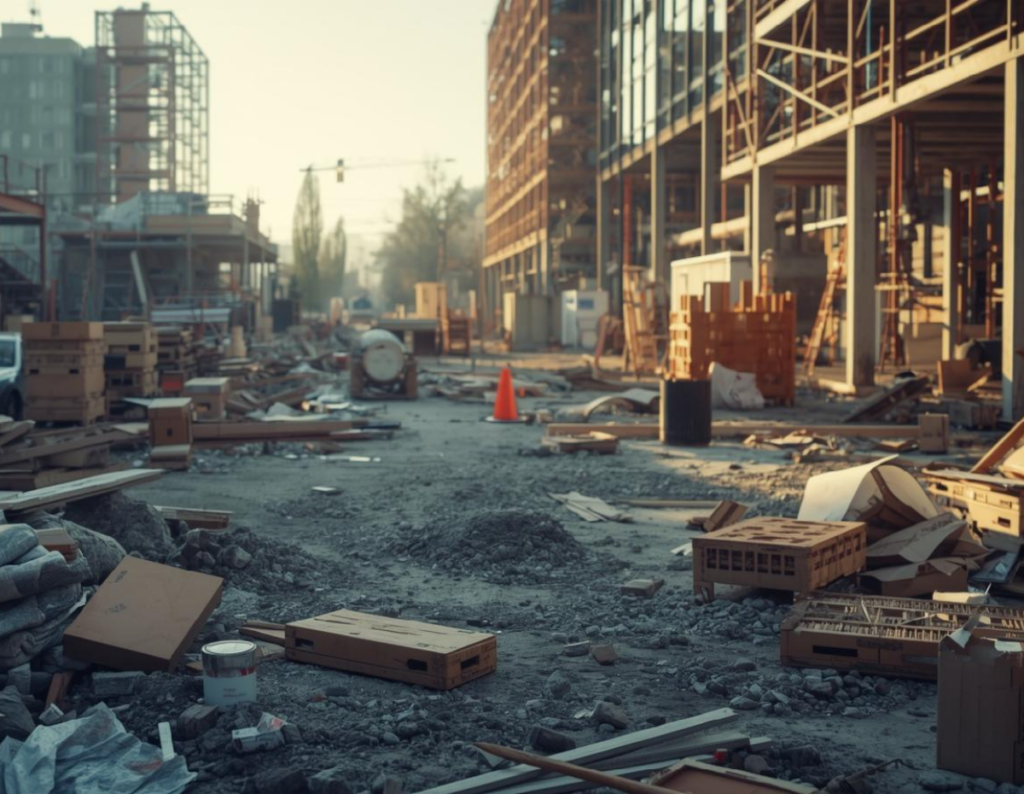
Construction sites are dynamic by nature. Layouts shift, access points change, crews rotate, and materials move daily as projects advance. These constant changes make construction site security uniquely challenging. Even well managed projects with fencing, locks, and basic monitoring in place can experience theft and vandalism when security planning does not evolve alongside the site itself.
Construction site theft prevention is often treated as a static task rather than an ongoing process. As a result, the most damaging incidents rarely occur through obvious breaches or during working hours. Instead, they happen quietly, after hours, in areas that were never identified as high risk. These overlooked construction site security risks lead to repeated losses, project delays, safety concerns, and increased insurance costs.
According to the National Insurance Crime Bureau, construction site theft costs the industry hundreds of millions of dollars each year, with materials and equipment among the most frequently stolen assets. Because recovery rates are low once theft occurs, prevention and active monitoring remain the most effective ways to reduce long term loss.
Understanding where security gaps most commonly occur is essential for protecting materials, equipment, timelines, and budgets. The following five areas consistently represent the highest and most underestimated risks on construction sites of all sizes.
Temporary Gates and Altered Fence Lines
Temporary access points are one of the most common construction site security risks and a leading cause of unauthorized entry. At the start of a project, perimeter fencing and gates are typically well defined and closely controlled. As work progresses, those boundaries rarely remain unchanged.
Fence panels are moved to accommodate deliveries. New gates are added for equipment access. Temporary openings are created to keep operations moving efficiently. While these changes are necessary, they often introduce vulnerabilities that are never fully addressed.
Temporary gates and modified fence lines are frequently excluded from construction site surveillance coverage and lighting plans. Gates may be monitored during working hours but left unsecured overnight. Fence sections intended to be reinstalled quickly can remain open for weeks. Over time, these access points become predictable entry routes for theft.
Once a site is perceived as easy to access and poorly monitored, it often becomes a repeat target. Without visible monitoring or a rapid response, losses escalate quickly and become harder to control.
Material Storage and Staging Areas
Material theft remains one of the most expensive construction site security issues, particularly when materials are staged outside monitored areas. Copper wiring, piping, fixtures, lumber, and tools are all high value items that can be removed quickly and resold easily.
For efficiency, materials are commonly stored in laydown or staging zones away from the main structure. While convenient for crews, these areas are often outside camera coverage and lighting designed to protect the building itself.
Construction material theft frequently occurs without any forced entry. Thieves target open storage zones because they allow fast access and a quick exit. In many cases, materials can be taken over multiple nights before anyone notices.
The cost of stolen materials extends well beyond replacement. Missing materials delay installations, disrupt subcontractor schedules, and force last minute reorders. These disruptions ripple through the project timeline, increasing labor costs and administrative overhead while straining relationships with suppliers and stakeholders.
Scaffolding and Vertical Access Routes
Vertical access points are frequently overlooked in construction site surveillance planning, yet they represent a significant vulnerability. Most construction site security strategies focus on ground level protection, including gates, doors, and fencing. However, construction sites are multi level environments where access is not limited to the ground.
Scaffolding, lifts, and unfinished stairwells provide alternative routes that bypass ground level controls entirely. Once someone gains elevation, they can move freely between floors, access stored tools, and enter interior spaces without encountering traditional barriers.
These access routes are particularly risky because they reduce visibility. Elevated intruders are less likely to be seen from the street or neighboring properties. They can remain on site longer and operate with less risk of detection.
Unsecured vertical access also increases liability. Unauthorized individuals accessing scaffolding or upper levels face serious injury risks. Damage to unfinished structures, safety systems, or equipment can occur, creating compliance and safety concerns that extend beyond theft alone.
Generators, Fuel, and Temporary Power Sources
Portable power infrastructure is a high value target for construction equipment and fuel theft. Generators, fuel tanks, and temporary electrical systems are essential to daily operations, yet they are often among the least protected assets on site.
These systems are usually placed based on operational convenience rather than security considerations. They may be positioned in low visibility areas with limited lighting and minimal surveillance. While locks and barriers may be present, static measures alone rarely provide sufficient deterrence.
Theft of generators and fuel is costly, but tampering presents even greater risks. Disrupted power can halt work entirely, damage sensitive equipment, and create dangerous electrical hazards. In some cases, power interference can delay inspections, inspections approvals, or critical milestones.
Protecting temporary power infrastructure requires active oversight that accounts for both theft and safety risks throughout the life of the project.
Low Visibility Perimeter Zones
Perimeter blind spots are among the most exploited weaknesses in construction site perimeter security. Every site has edges that receive less attention, whether they border alleys, wooded areas, drainage paths, or neighboring properties.
These zones experience less natural observation and fewer routine checks. As the site footprint changes, fencing may be moved, lighting may be removed temporarily, and sightlines may be blocked by equipment or stored materials.
Fence breaches in low visibility areas often go unnoticed until a loss has already occurred. Once a breach exists, it can be exploited repeatedly if it is not detected and addressed quickly.
Effective construction site security requires continuous reassessment of perimeter conditions. Ignoring these outer edges leaves the site exposed even when more visible areas appear secure.
Why Overlooked Risks Lead to Disproportionate Losses
Construction site security incidents rarely occur in isolation. They are usually the result of small gaps that persist over time. A temporary gate left unsecured. Materials staged outside monitored zones. Scaffolding left accessible after hours.
What makes these vulnerabilities especially costly is their tendency to repeat. Once a site is identified as an easy target, losses increase, response costs rise, and teams are forced into reactive measures that are more expensive and less effective than proactive protection.
Beyond financial impact, security failures affect worker safety, morale, and reputation. Clients may question oversight. Insurers may reassess coverage. Delays can strain relationships with investors and project partners.
The Role of Active Construction Site Surveillance
Traditional construction site security often relies on static measures such as fencing, locks, and signage. While these elements are necessary, they are not sufficient on their own in dynamic environments.
Active construction site surveillance provides continuous visibility into site activity. It helps deter unauthorized access, documents incidents, and enables rapid response when irregular behavior occurs. Unlike passive systems, active surveillance adapts to shifting access points, evolving layouts, and changing risk profiles.
Construction site monitoring is most effective when it is proactive rather than reactive. Visibility, consistency, and response speed are key to preventing small vulnerabilities from turning into major losses.
Secure Your Construction Site with Opus
Construction site theft and vandalism are not random events. They occur where access goes unmonitored and construction site security risks are left unaddressed. If your project includes temporary gates, material staging areas, scaffolding, portable power systems, or low visibility perimeter zones, those vulnerabilities already exist.
Opus Operations provides active construction site property surveillance designed specifically for dynamic construction environments. Our professional construction site monitoring solutions deter intrusions, protect valuable assets, and reduce loss around the clock.
Do not wait for a theft or incident to expose a security gap. Contact Opus today to implement construction site surveillance that protects your project, your schedule, and your bottom line.
To explore customized programs designed for your industry and operations, contact Opus Operations today.
Let’s redefine what facility management means, together.
Our Services


NAVIGATION
Miami Office 1601 Washington Ave Miami Beach FL 33139
Midwest Office 1481 Warrensville Center Rd, 2nd Floor South Euclid, OH 44121
stay in touch
Be the first to know the latest industry news


